
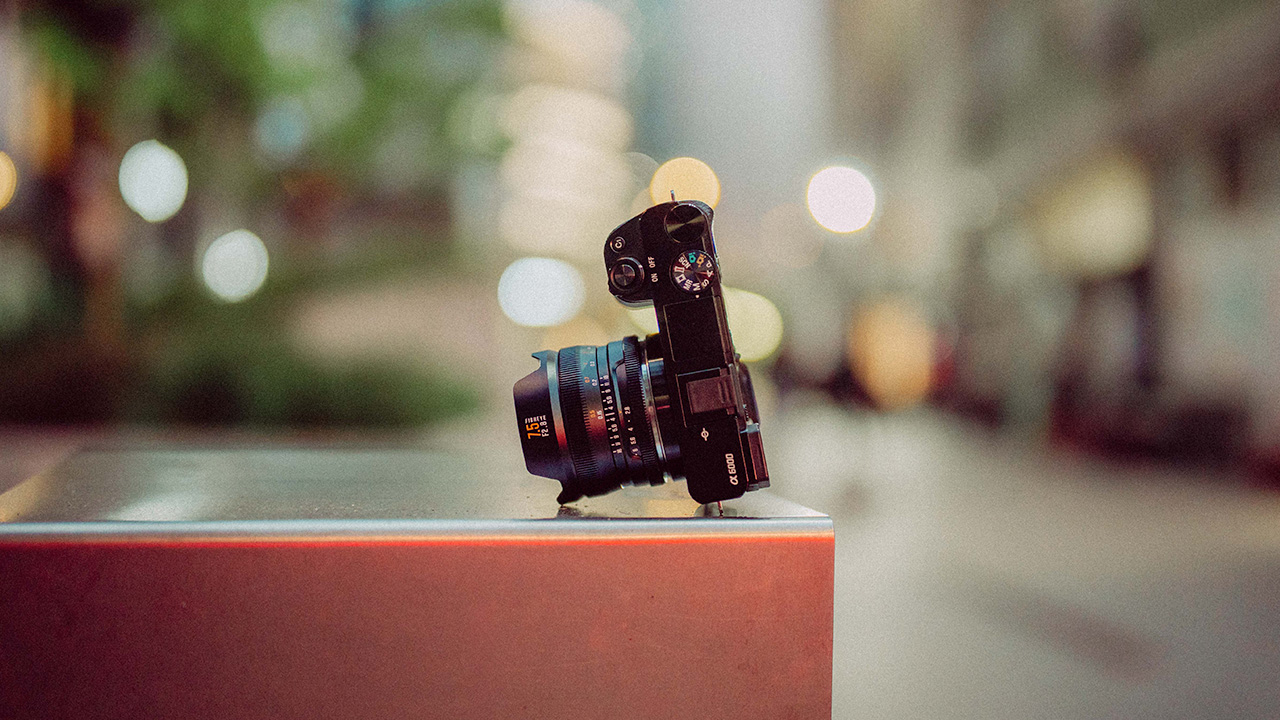
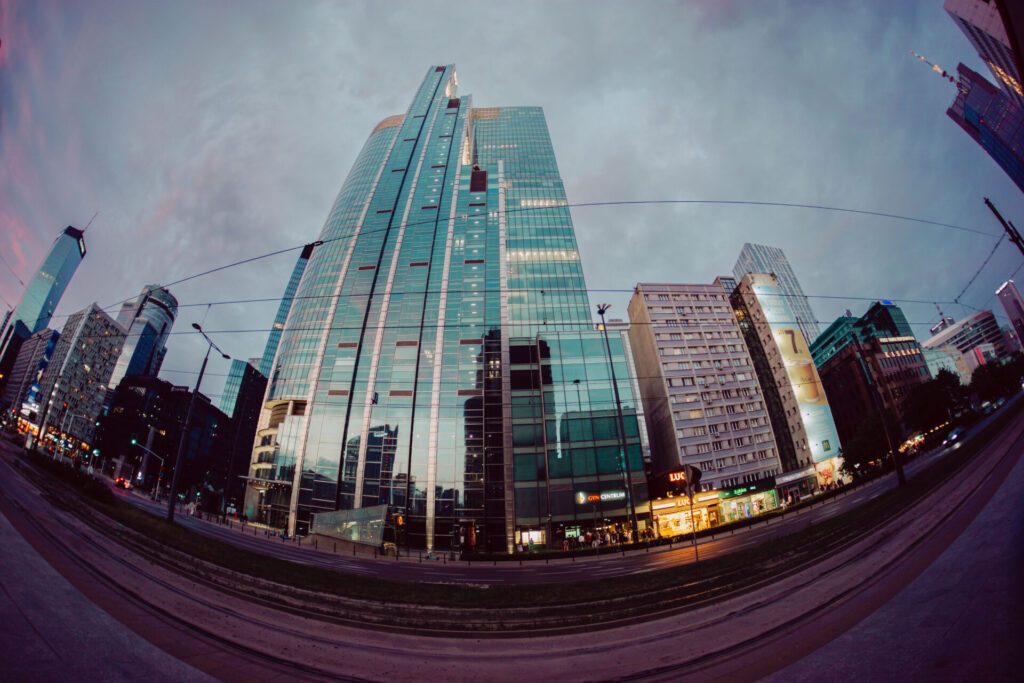
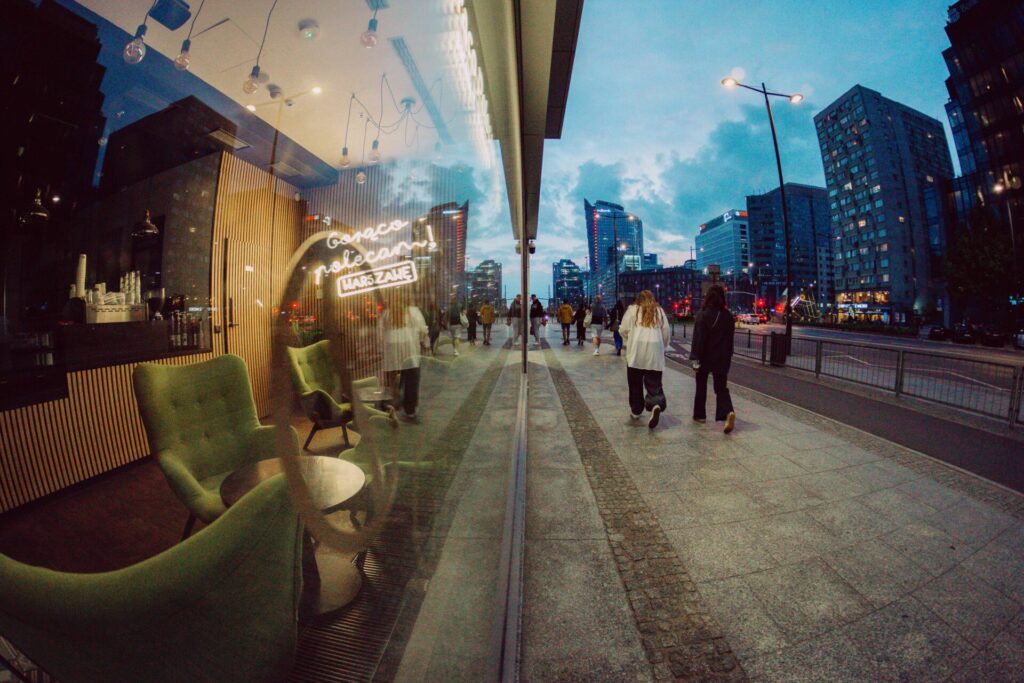
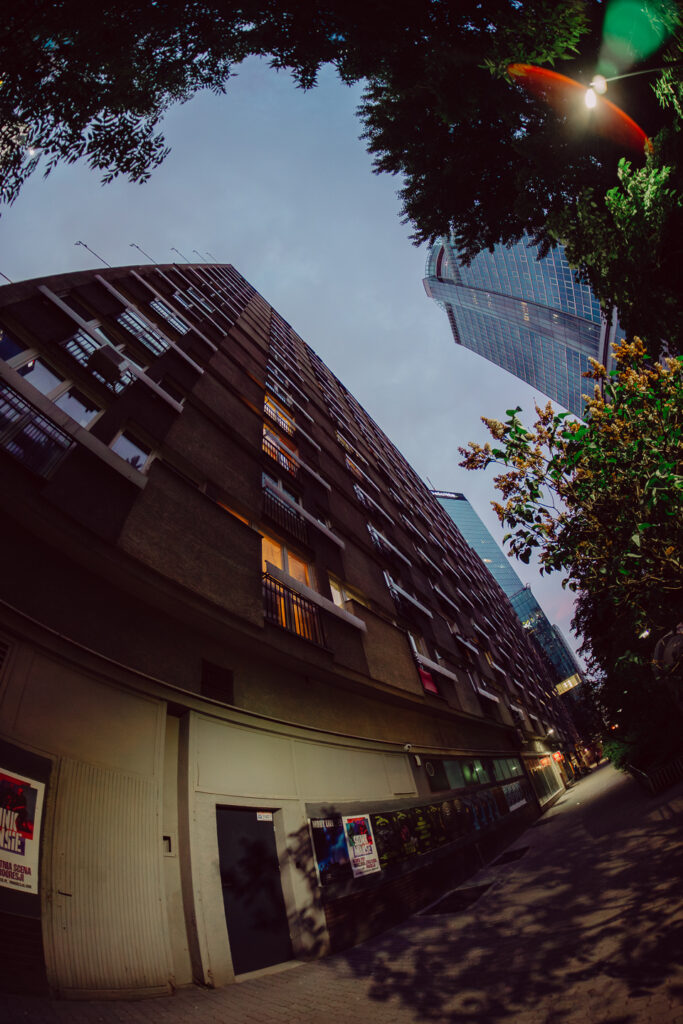
There's a moment with every fisheye lens when you look through the viewfinder for the first time, and the whole street bends around you. With the Brightin Star 7.5mm F2.8 IV on my Sony A6000, that moment came fast. And it kept coming, because I took this lens where Warsaw makes the most sense for a 190° view.
If you're searching for the best fisheye lens for Sony APS-C, you've probably noticed the same thing I did. Most of what's out there is a list of ten lenses nobody actually shot with. So this is the opposite. The Brightin Star 7.5mm F2.8 IV and Sony A6000 in a real city. Here's what I found.
🎥 Prefer video? Watch the full Brightin Star 7.5mm review on YouTube
Build and Handling on the Sony A6000
The first thing you notice is how compact it is. The body is all metal, and at 274 grams, it sits on the A6000 without making the camera feel front-heavy. For a lens that sees almost everything around you, it's surprisingly discreet.
The front element is the classic fisheye bubble, but it's protected by a built-in petal hood. You can't screw on front filters. Instead, there's a 27mm rear filter slot, which is fine for most people and something to know if you shoot ND for video.
The highlight for me was the focus ring. It's smooth, well damped, and precise, the kind of ring that makes manual focus feel nice. At 7.5mm, depth of field is so deep that you rarely fight for focus anyway. Set it near the hyperfocal distance, and almost everything from a meter or so to infinity is sharp. The distance and depth-of-field markings on the barrel make that easy.
Beginner tip: Turn on focus peaking. It's a big help when you're shooting close.
Brightin Star 7.5mm F2.8 IV Image Quality
Overall image quality is nice, and the center of the frame is definitely sharp. That matters more than people think with a fisheye. Your main subject, whether it's a building entrance, a doorway, or a person in the frame, usually sits near the middle, because that's where the distortion is gentlest.
Brightin Star uses three ED and three high-refractive elements to keep chromatic aberration, distortion artifacts, and flare under control. With a 190° view, the sun or a streetlight is often somewhere in your frame, so that matters in practice.
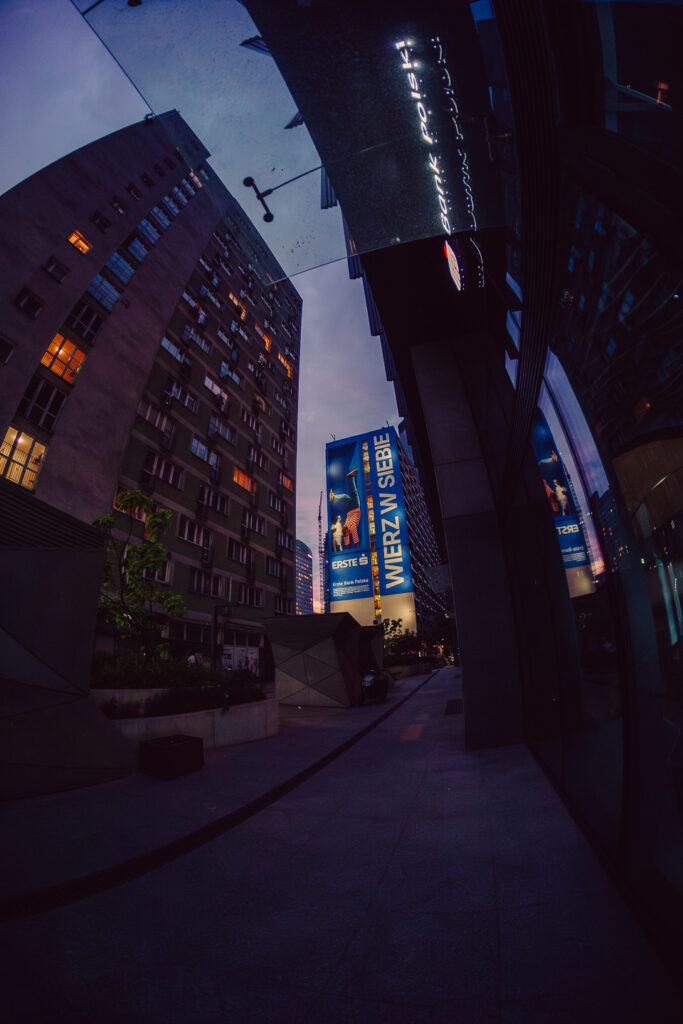
The 5-blade diaphragm gives you 10-point sunstars when you stop down. That's a nice touch at night, when city lights turn into small starbursts across the frame.
As with any fisheye, the extreme edges of the frame are where the optics work hardest. For architecture, I'd stop down to around f/5.6 to f/8 anyway. You get the most even sharpness across the frame, and with this much depth of field there's no downside.
How to Shoot Architecture and Streets with a Fisheye
This is where a fisheye goes from a novelty to a tool. Some practical rules that worked for me.
Keep the horizon in the middle
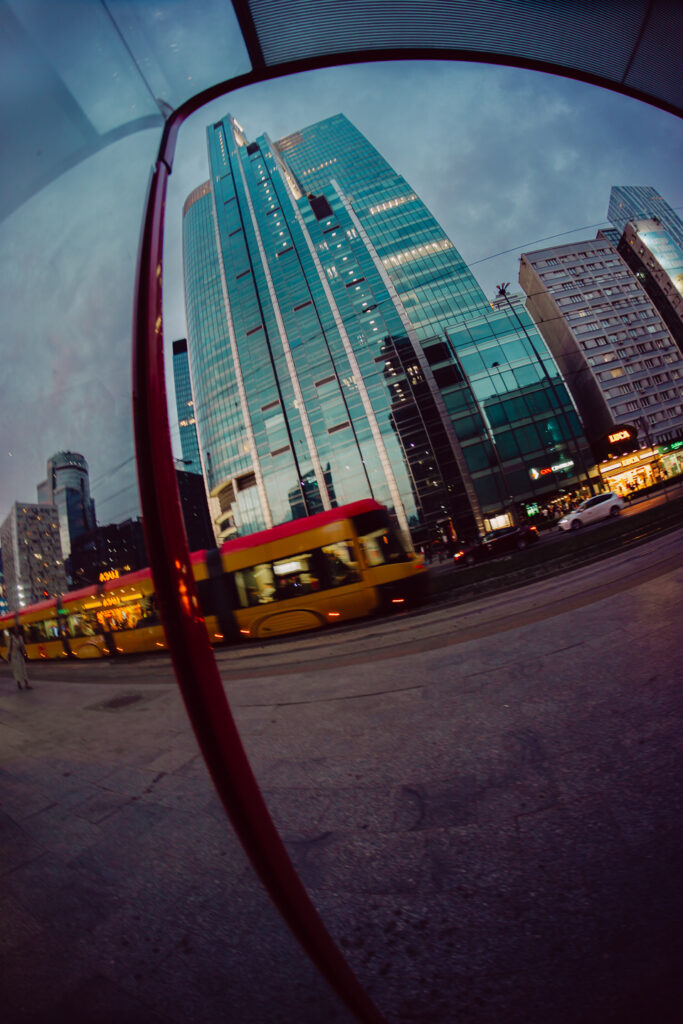
Lines that pass through the center of a fisheye frame stay straight. Put the horizon or a building's base line high or low in the frame, and it curves dramatically. Use that on purpose, and the distortion becomes a creative choice instead of an accident.
Use the curve to frame buildings
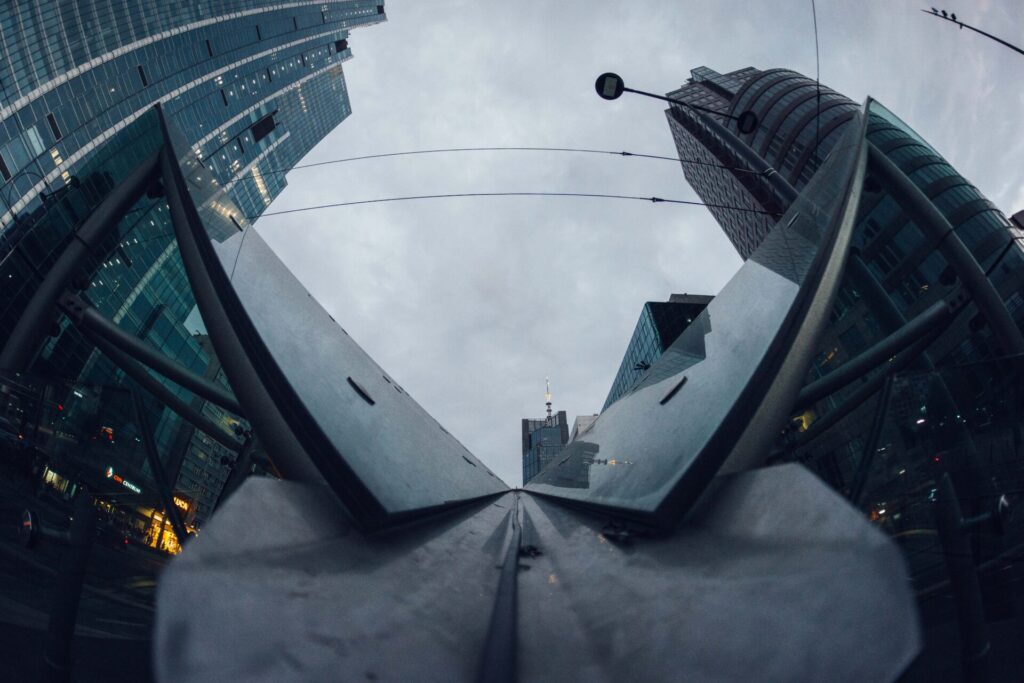
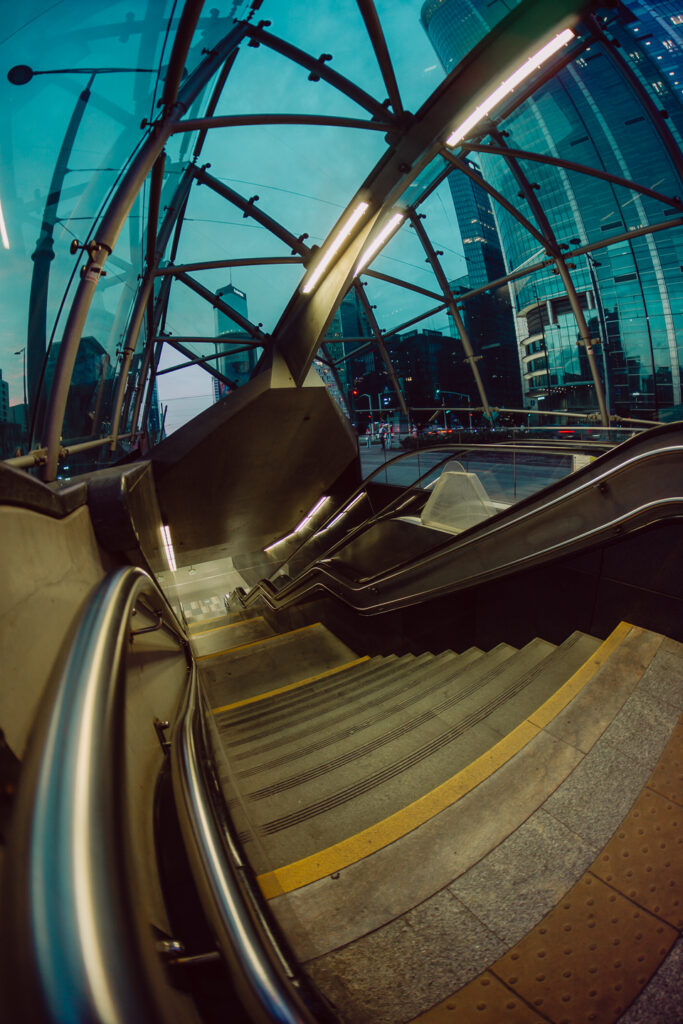
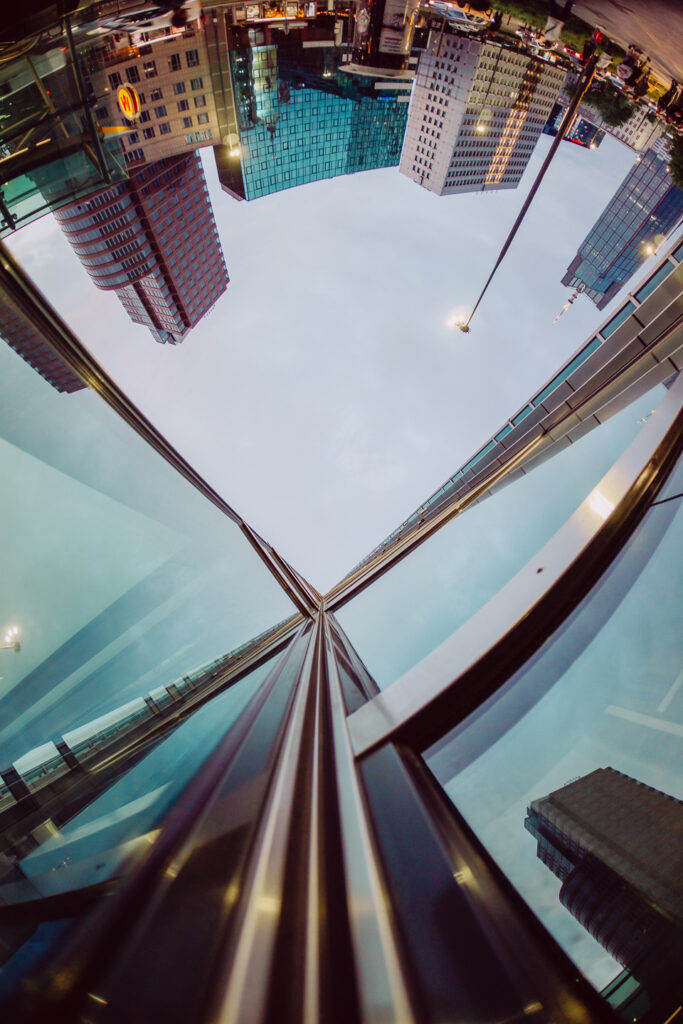
Point the lens slightly upward at a tall building, and the surrounding structures lean inward like they're framing it. Shoot straight up between two towers and the sky turns into a shape. This is where the fisheye look really pays off in architecture.
Get close
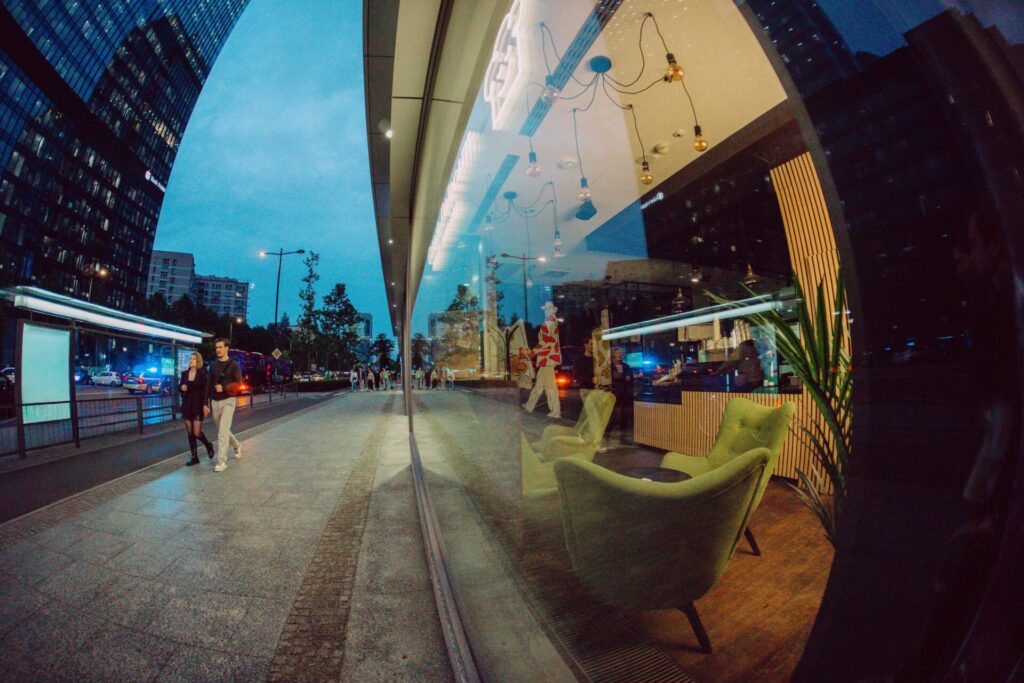
The 0.15 m minimum focus distance lets you put a foreground detail almost against the lens, like a railing, a door handle, or a pattern on a wall, while the whole scene still fits behind it. That near-far contrast is what makes fisheye images feel immersive.
Zone-focus for street
For candid street work, set f/8, put focus around one to two meters, and forget about it. Everything from very close to infinity will be acceptably sharp, so you can shoot from the hip and react instead of focusing.
Defish when you need to
If a client or a project needs straighter lines, Lightroom and Photoshop can apply lens correction to reduce the fisheye distortion. You'll crop some of the frame, but you end up with a usable ultra-wide image from the same file.
Fisheye vs. Rectilinear: Brightin Star 7.5mm vs. AstrHori 9mm
If you're mainly shooting architecture, you should know there's a real alternative. I previously tested the AstrHori 9mm F2.8 in a Warsaw blizzard. It's a rectilinear ultra-wide, not a fisheye, with a 111.4° angle of view, and its job is to keep straight lines straight.
The difference comes down to intent:
- Choose the AstrHori 9mm when you want buildings to look like buildings: real estate, interiors, clean architectural documentation.
- Choose the Brightin Star 7.5mm when you want the image to feel like something: crazy, dramatic, a bit surreal. It sees much wider, and the curve is part of the picture.
If you're still building a wide-angle APS-C kit, my 7Artisans 6mm F2 hands-on is worth a look too, for a different take on extreme wide.
Is It the Best Fisheye Lens for Sony APS-C?
Here's how it compares with the other common Sony APS-C fisheye options.
- TTArtisan 7.5mm F2: a stop brighter, which helps in low light and astro. It's the lens most buying guides recommend by default.
- 7Artisans 7.5mm F2.8 II: a popular, affordable alternative with a fixed hood.
- Samyang 8mm F3.5: the long-standing name in this category, but at around a $330 street price, roughly double the Brightin Star.
Against that field, the Brightin Star 7.5mm F2.8 IV stands out with its 190° view, ED and HR glass, close focus, and a well-made metal body at a lower price than the established names. If you want the fisheye look on a Sony APS-C camera and you're comfortable with manual focus, it's the one I'd recommend first.
Limitations to Know Before You Buy
- Manual focus only. No autofocus and no electronic contacts, so no aperture data in your EXIF.
- No front filters. You get the rear slot only, which limits your ND options for video.
- APS-C only. On a full-frame body like the A7R V, you'll need APS-C crop mode.
- The fisheye look is strong. It's a specialty lens. Used on every shot, the effect gets repetitive fast, so treat it as a creative tool, not your everyday wide.

Brightin Star 7.5mm F2.8 IV Final Words
The Brightin Star 7.5mm F2.8 IV is a very good lens, and I really enjoyed shooting with it. The focus ring is a pleasure, the center is sharp, and the 190° view turns ordinary city architecture into something you want to stop and look at. Paired with an A6000, which still holds up in 2026, it makes a small, capable setup for anyone who wants to start exploring fisheye photography.
If you've enjoyed Brightin Star glass before, like my Brightin Star 24mm F1.8 review, you'll recognize the same focus on build and handling here.
Want to see the real footage and sample images?
Watch Brightin Star 7.5mm F2.8 IV on YouTube.
And if you shoot with it, tag me on Instagram @eastbanger. I'd love to see how you bend your city.


