

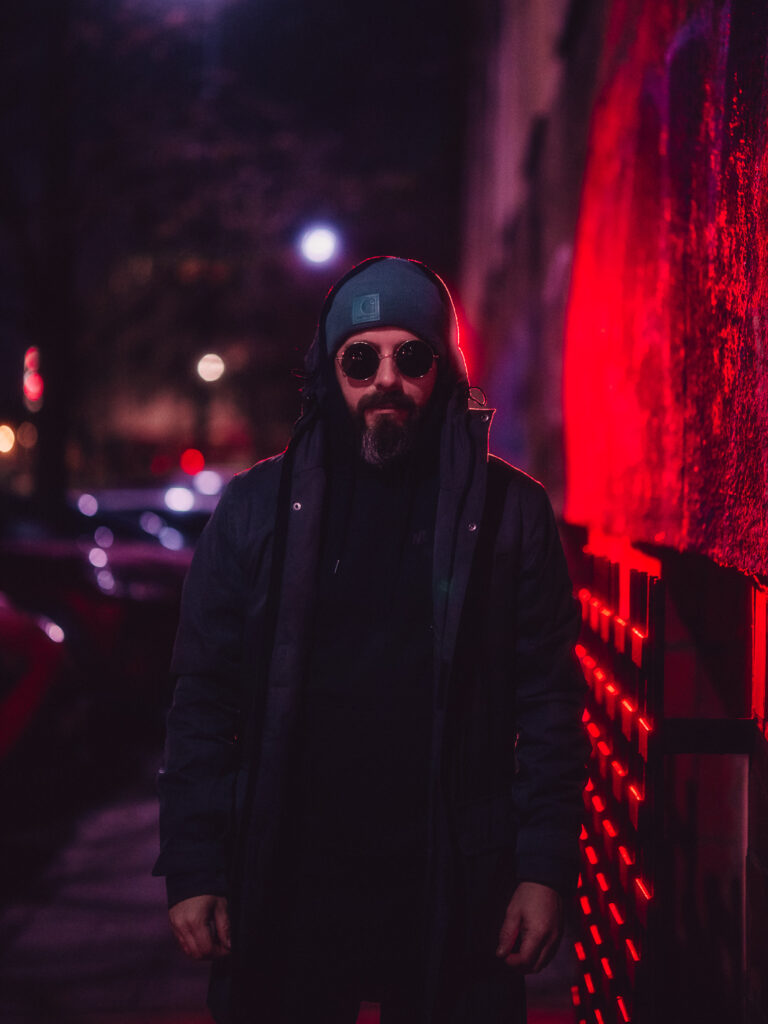
A real-world stress test of the GVM PD60C - a 60W RGB flashlight. No studio and no safety net, just neon streets and one hell of a night.
It's 11 PM on a Tuesday. The street is half-lit by a flickering shop sign and the orange smear of a distant sodium lamp. My model is in position. Light jacket, hood up, standing at the mouth of an alleyway that could have been pulled straight from Blade Runner. And I'm standing there holding what looks, to any passing stranger, like a very serious flashlight. That flashlight is the GVM PD60C.
And over the next three hours, it's going to do things I didn't fully expect from a $139 piece of gear.
This is my honest review, not from a controlled studio environment, but from a live cyberpunk-style street shoot where everything that could go wrong, did. And somehow, the light held its own through all of it.
What Is the GVM PD60C?
Before we get into the shoot, let's establish what you're actually buying.
The GVM PD60C is a 60W handheld COB LED video light with a built-in rechargeable battery and RGB full-color output. And a form factor that looks less like a photography panel and more like a professional-grade torch.
That flashlight shape isn't an accident. It's designed to be held, aimed, swung, and used as a directional creative light source. Key things that made it relevant to our specific night:
- Built-in battery: no power cables on a public street – complete untethered freedom
- Full RGB: 16 billion color combinations via red-green-blue mixing
- HSI mode: 36 million combinations via hue-saturation-intensity – more nuanced color control
- 60W output: genuinely punchy for a handheld light – it can hold its own against street-level ambient
- CRI 97+: even saturated colors render with accuracy – skin tones don't go muddy under neon
Part 1: The RGB Color Experience
Here's the thing about cyberpunk photography. Specifically, the aesthetic lives and dies on color. Not just any color – but rather specific, saturated, directional color. That feels like it's coming from a world that doesn't follow the rules of natural light.
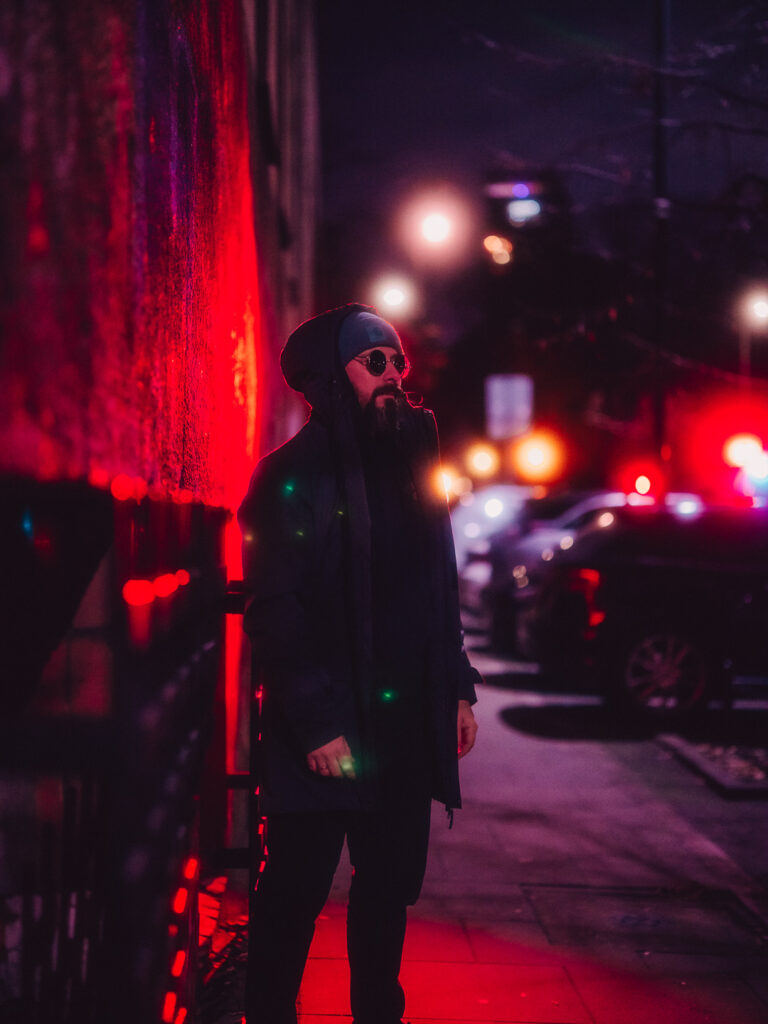
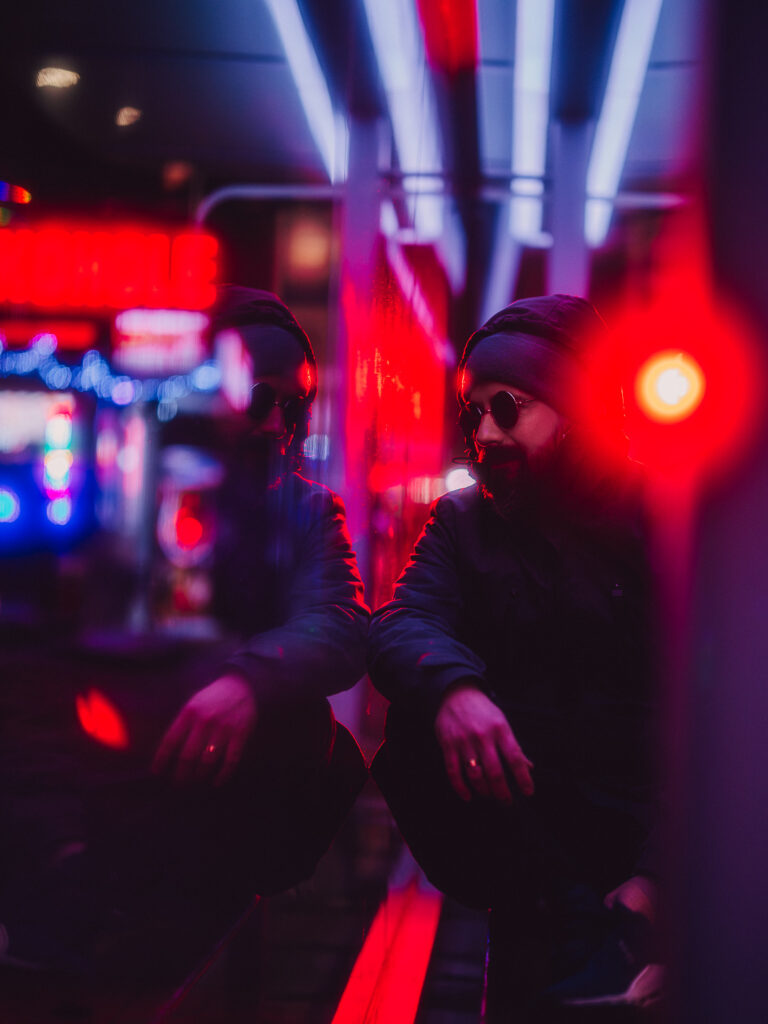
For example, think of red rim lighting and electric cyan bleeding across wet pavement. Similarly, think of a purple key light that makes your subject look like they're being interrogated by something.
Fortunately, the GVM PD60C in RGB mode handles all of this.
While on set, I was dialing with deep red for a rim light. Moreover, the transition between colors on the unit's dial is smooth and fast. In fact, there is no hunting through menus and no lag. Twist, land, shoot.
One Unexpected Win
The GEL mode.
Specifically, with 60 built-in gel color presets, I found two that replicated classic film gels. A warm amber and a deep blue. Consequently, these gave certain frames a completely different cinematic register without touching RGB at all. Furthermore, for photographers who think about color in terms of traditional film gels, this mode will feel intuitive.
The 16 built-in light effects (Lightning, Disco, Cop Car, Pulsing, Fireworks, and more) went largely unused during this shoot. They're more suited to video and motion work. But for a future shoot where we want a strobing neon-sign effect in camera? The GVM PD60C already has it built.
Part 2: Battery Freedom on a Public Street
This is where the GVM PD60C surprised me, and it's the feature that separates it from most of the competition at this price point. The built-in battery is not an afterthought.
We shot for approximately three hours across four different street locations. The light ran continuously, at varying brightness levels, mostly between 30-50%, without dying on us once. I arrived with a full charge (100W USB-C fast charge gets it from empty to full in around two hours), and I left with power to spare.
Why does this matter more than it sounds? Because location photography, especially in public spaces, is logistical chaos. You're managing a model, a location, ambient light that changes every ten minutes as shops open and close, pedestrians walking through your frame, and your own creative ideas evolving in real time. The last thing you want is to be tethered to a power brick or hunting for a wall outlet on a wet street at midnight.
The GVM PD60C's battery doesn't just give you freedom of movement – it removes an entire category of problem from your shoot.
Build, Portability & the Flashlight Factor
The aluminum alloy housing feels solid without feeling heavy. At 1.5kg and around 31cm long, the GVM PD60C is very portable. It fits in a backpack alongside your camera body and a couple of lenses without demanding its own dedicated bag.
The flashlight form factor is worth dwelling on, because it's a fundamental design choice that affects how you use this light creatively. Unlike a panel light that you mount on a stand and aim from a fixed position, the PD60C is designed to be held, angled, and repositioned in real time.
A standard LED panel gives you none of that flexibility. The GVM PD60C's shape is the feature.
App Control via Bluetooth
The GVM LED app (available on iOS and Android, search 'GVM_LED') connects to the PD60C via Bluetooth 5.0 with Mesh networking – meaning you can control multiple GVM lights simultaneously from your phone, even if they're different models.
On our shoot, we were working with a single light, so Mesh networking wasn't the star of the show. But the app itself is very useful for color precision. Rather than hunting for exact hue values on the physical dial, you can type in a specific HSI value, pull from a color wheel, or recall a saved preset. It's very handy when you want to return to a specific look after changing scenes.
One note for photographers evaluating this for multi-light setups. If you expand to the 3-light kit (available directly from GVM's site), the Mesh system allows you to control all three lights from one device – adjusting color, brightness, and effects across the full rig simultaneously. That's a serious workflow advantage for location portraits or event work.
Who Is the GVM PD60C Built For?
After a full night on location, here's how I'd honestly categorize who gets the most from this light.
Buy it if you: shoot on location without access to power outlets. Work in creative, editorial, or fine art photography where color is a storytelling tool. Shoot video alongside stills and need a light that handles both. Want a multi-mode light that replaces several tools in one body. Are building a portable 2-3 light RGB kit for location portraits, events, or fashion work.
Think twice if you: work primarily in a controlled studio with unlimited power access, a higher-powered panel or monolight will give you more output and modifiers. Need a light specifically for softbox or beauty dish use, the PD60C's COB design doesn't attach to standard light modifiers easily. Shoot exclusively in natural-light documentary style, where added lighting would break the aesthetic.
Final Words: Is the GVM PD60C Worth It?
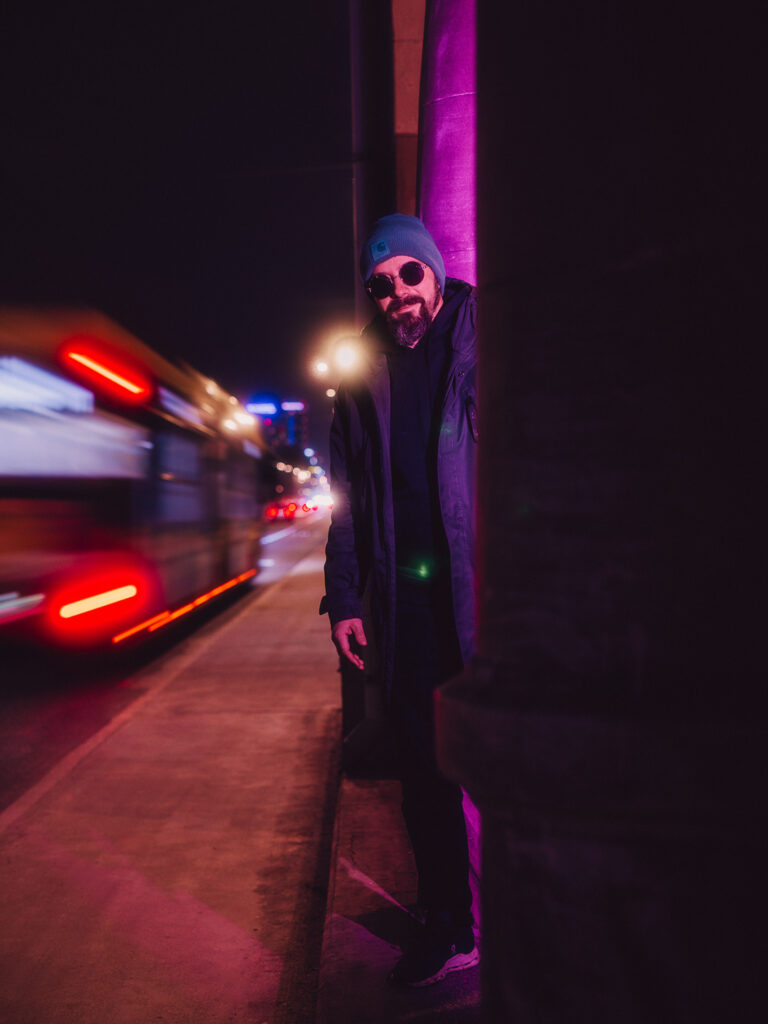
Let me put it plainly. The GVM PD60C punches well above its $139 price tag, and our cyberpunk street shoot proved exactly why.
It's not a compromise light. It's a creatively ambitious light with a specific design philosophy. The flashlight form factor, the full RGB capability, the built-in battery, and the 60W output add up to something very useful and fun to shoot with.
For a photographer looking to add creative, portable, battery-powered RGB lighting to their toolkit without spending $400+, this is one of the sharpest value propositions in the category right now.
The 3-light set is worth considering if you're serious about using it for more complex location setups – the Bluetooth Mesh system turns it into a scalable rig that would cost significantly more from any competitor
As usual, I made a video about it.


