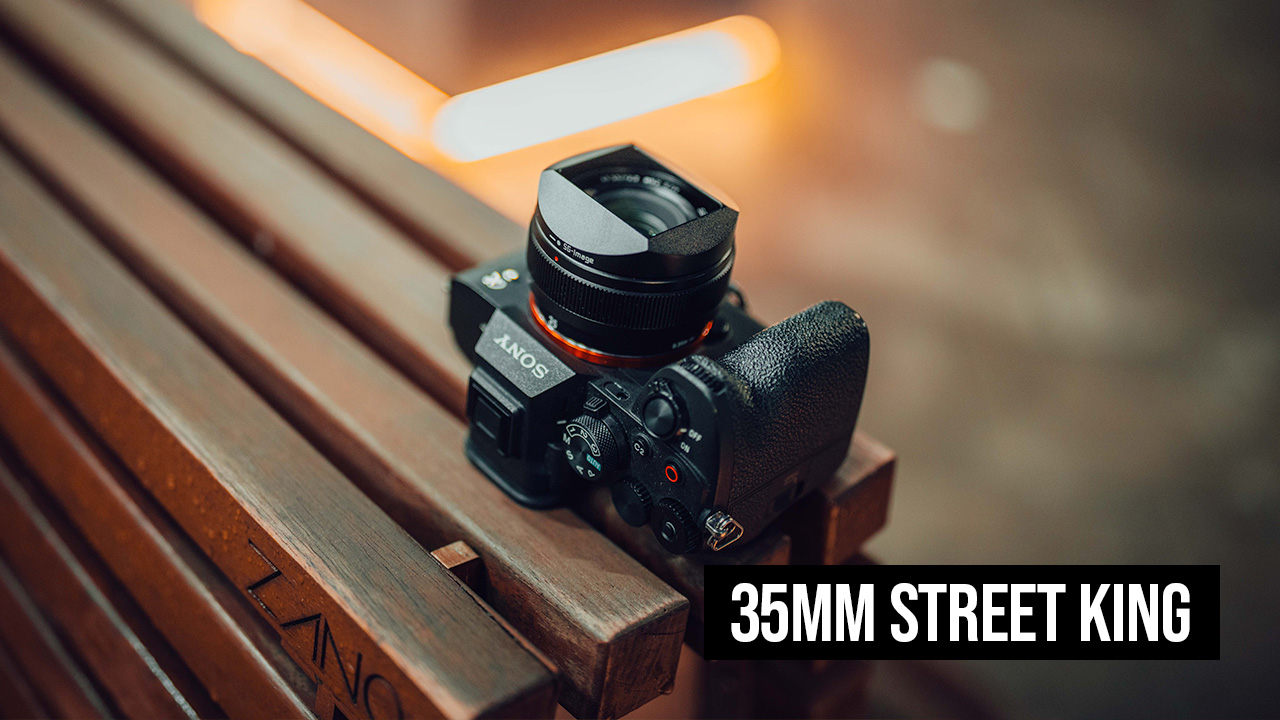
When Warsaw's weather forecast predicted the heaviest snowfall in years, I knew I had to go out. It was the only chance to test the AstrHori 9mm F2.8 in conditions most photographers would avoid.
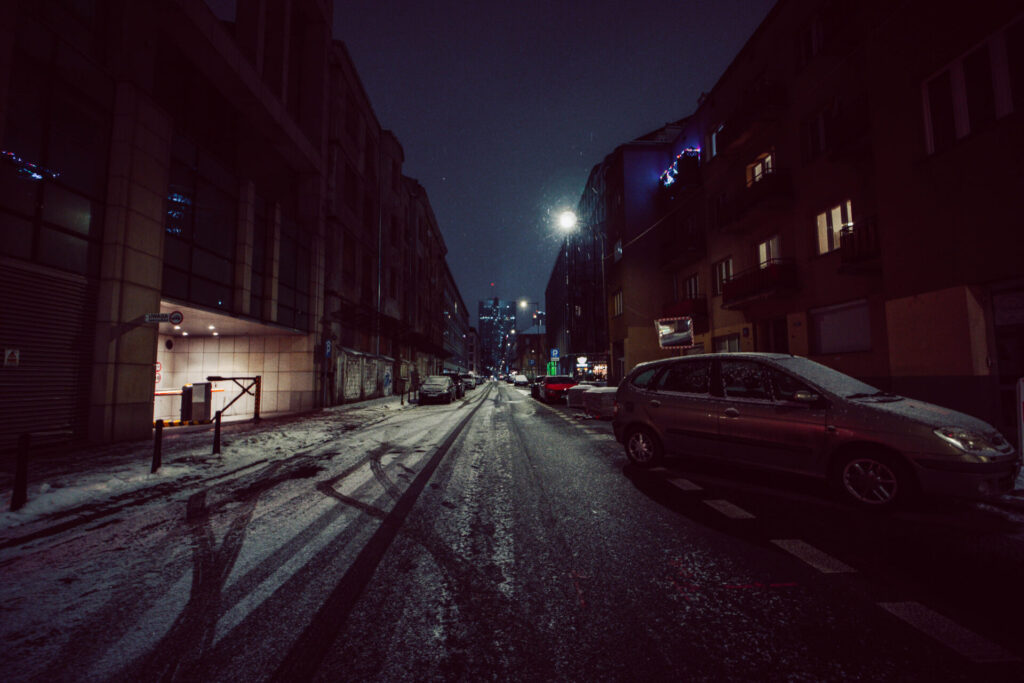
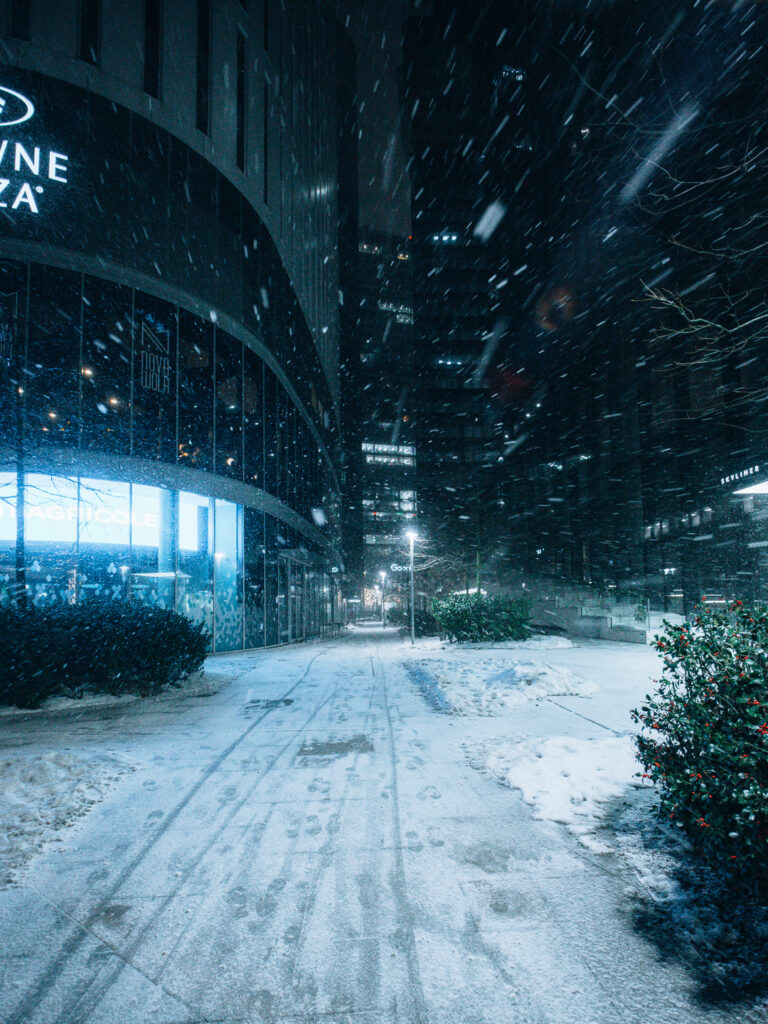
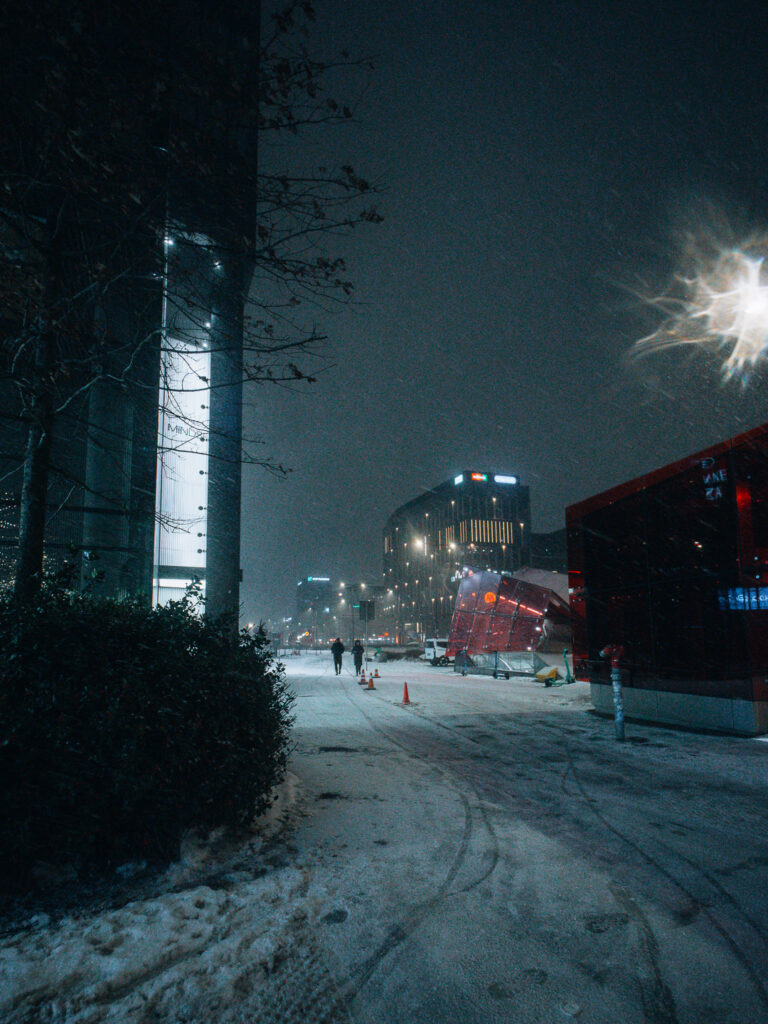
Visibility was near-zero. The city transformed into a white void. A rare weather event that wouldn't repeat for years. I grabbed my Sony A6000, mounted the AstrHori 9mm F2.8, and headed into the storm.
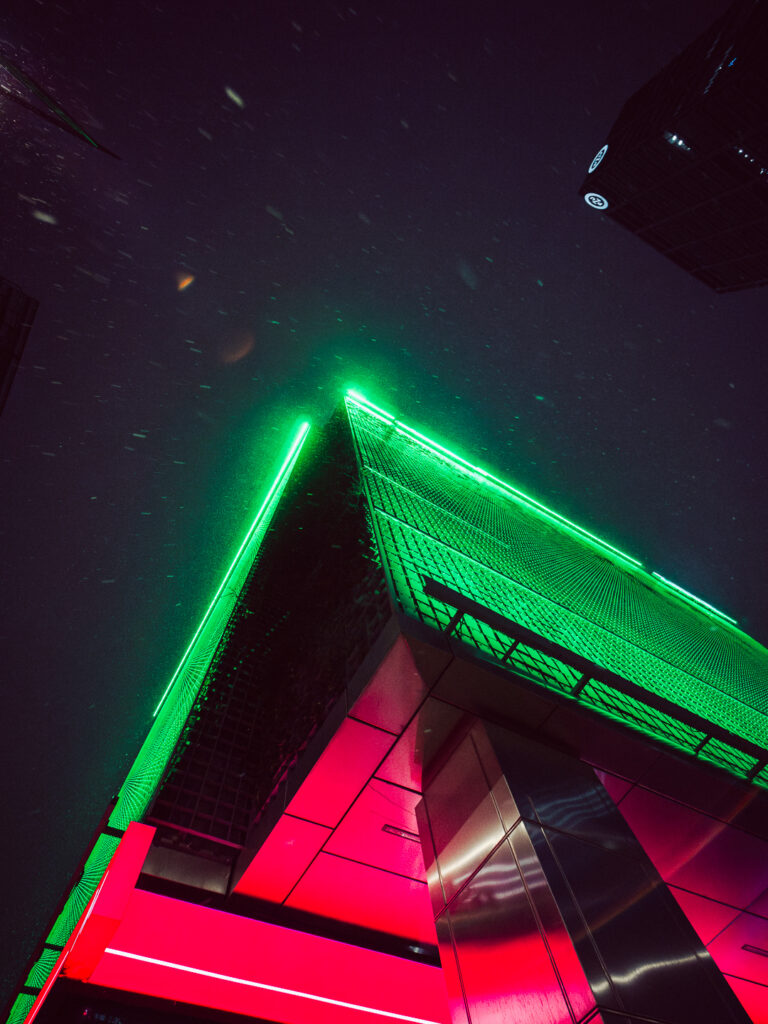
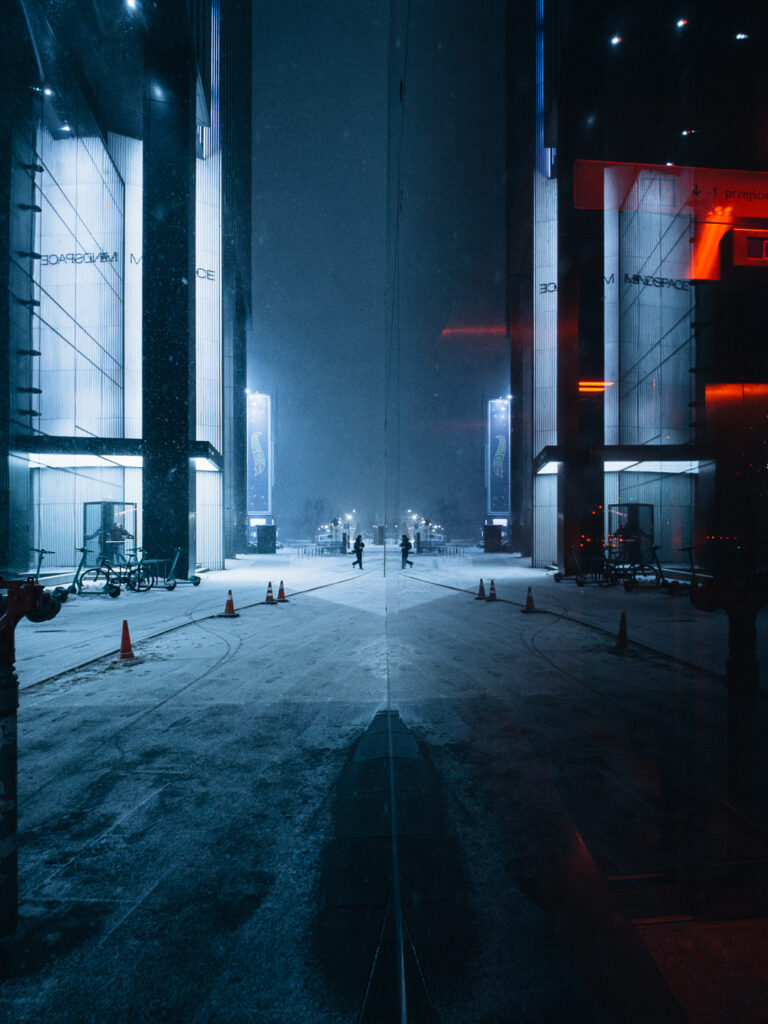
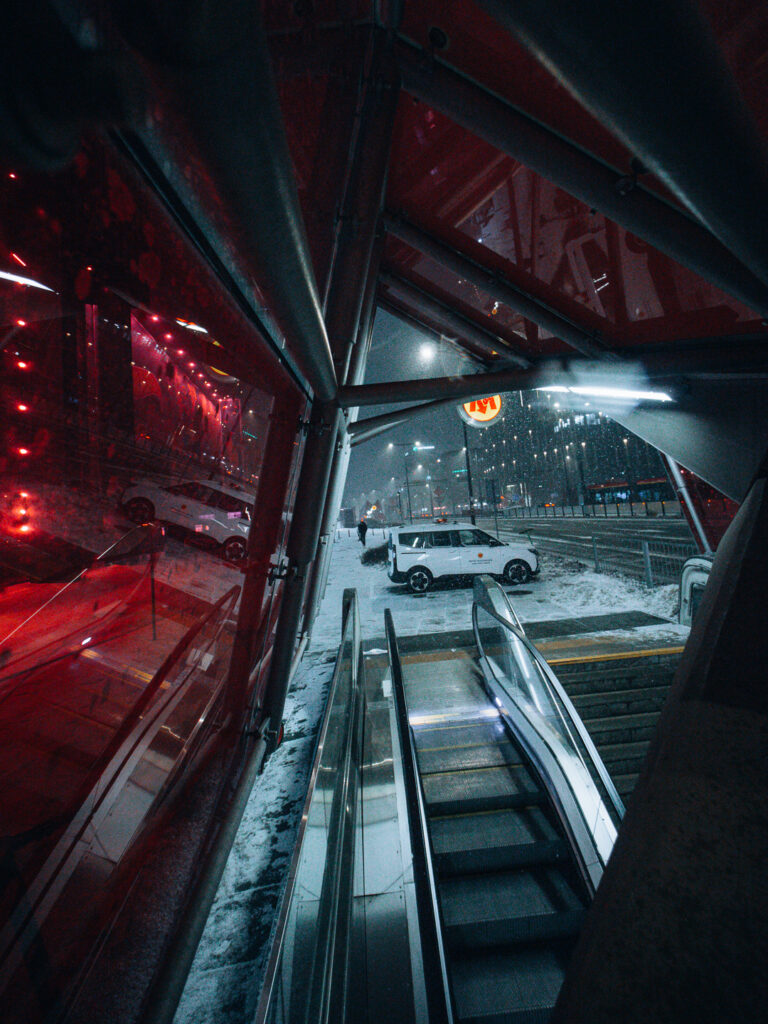
What followed were a few hours of shooting in some of the most challenging conditions I've ever encountered. I got some of the most dramatic images I've captured with an ultra-wide lens.
Updated October 2026
Prices and specs rechecked. The AstrHori 9mm F2.8 is still $169 at list price and comes in five mounts. Sony E, Fujifilm X, Canon RF, Nikon Z, and Micro Four Thirds. I’ve also added a specs table, a comparison with the 7Artisans 10mm and Brightin Star 7.5mm, and answers to the questions readers ask most in the emails and comments.
Why the AstrHori 9mm F2.8 for a Blizzard?
AstrHori designed the 9mm F2.8 as an ultra-wide manual focus prime specifically for APS-C cameras. On my Sony A6000, the 9mm focal length translates to a 13.5mm full-frame equivalent. In a blizzard where the snow limited visibility to meters rather than blocks, that extreme width became essential.
At $169, the AstrHori 9mm F2.8 sits at the budget end of ultra-wide lenses. However, its specifications suggest more capability than the price implies. The optical construction consists of 11 elements in 8 groups. They include one aspherical element and two extra-low dispersion (ED) glass elements designed to minimize chromatic aberration and distortion.
The f/2.8 maximum aperture provides solid low-light performance, crucial when shooting in overcast, snowfall-obscured conditions where light levels drop significantly. But specs on paper mean nothing in a blizzard. The real question was simple: would it work when everything else was failing?
AstrHori 9mm F2.8 Specs
- Mounts: Sony E, Fujifilm X, Micro Four Thirds, Canon RF, Nikon Z
- Format: APS-C
- Focal length: 9mm (13.5mm full-frame equivalent on APS-C)
- Focus: Manual
- Focus range: 0.2 m to infinity
- Aperture range: f/2.8 to f/16
- Aperture blades: 7
- Angle of view: 111.4°
- Optical construction: 11 elements in 8 groups (2 aspherical, 3 ED)
- Filter thread: 62mm (front)
- Size: approx. 62 x 66 mm (Sony E)
- Weight: approx. 306.5 g (Sony E)
- Price: $169
The Blizzard: Heaviest Snowfall in Years
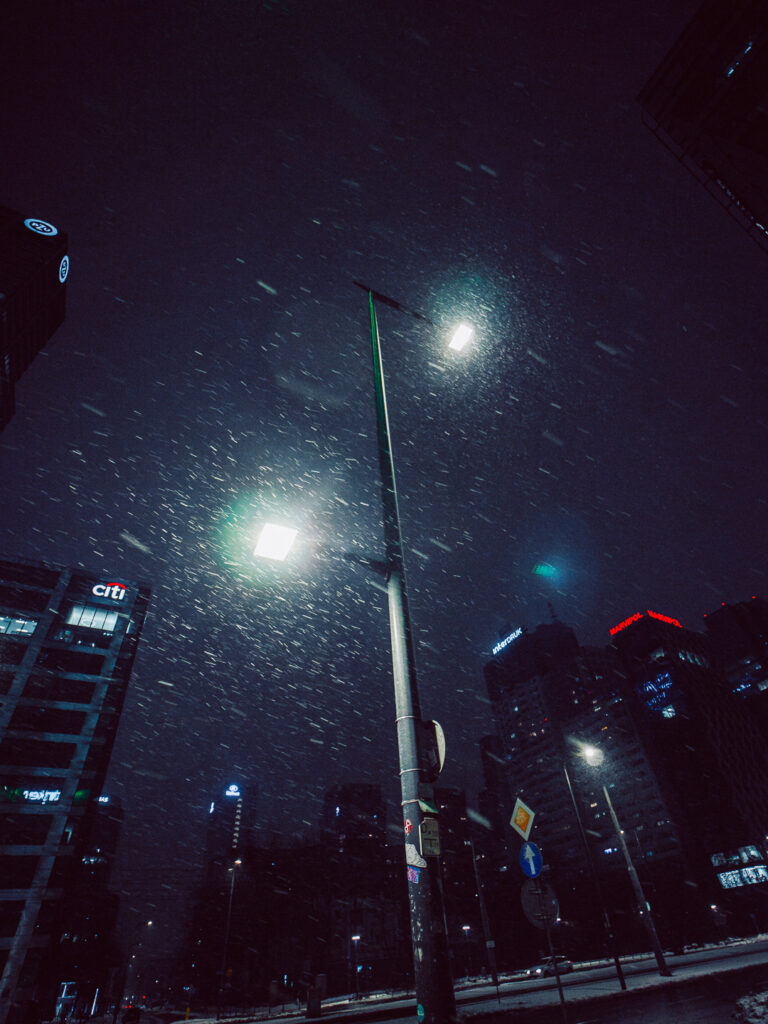
Warsaw doesn't get blizzards like this often. When it does, the city essentially stops. Public transport slows to a crawl. Streets empty. Visibility drops to near-zero as snow falls so heavily you can barely see across an intersection.
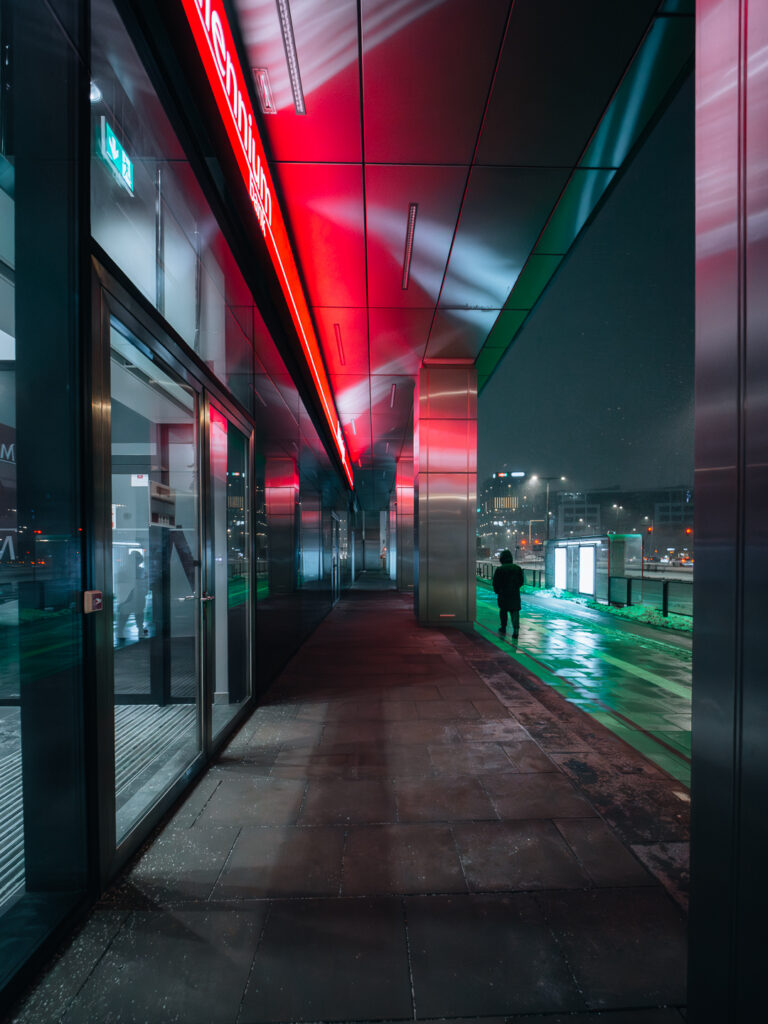
For a street photographer, it's the kind of rare opportunity you can't miss. The city looked completely transformed. Familiar areas turned alien, buried under accumulating snow, illuminated by diffused light that made everything feel cinematic and otherworldly.
As mentioned, I paired the AstrHori 9mm F2.8 with my Sony A6000. It is a 12-year-old camera that I've used extensively and trust completely. What's more, the combination is compact, lightweight, and inconspicuous. In a blizzard where most people were rushing for shelter, a small camera setup let me work without drawing attention.
First Impressions: Build Quality in Extreme Cold
The AstrHori 9mm F2.8 features all-metal construction with a full-metal barrel and a knurled manual focus ring. At 307 grams, it's light enough for extended handheld shooting but heavy enough to feel substantial. The build quality surprised me. This doesn't feel like a $169 lens.
In freezing temperatures with snow accumulating on every surface, the metal construction became relevant. The lens handled the cold surprisingly well. No fogging, no moisture creeping into the optics, and the manual focus ring continued operating smoothly even as my fingers went numb. The built-in petal-shaped lens hood provided some protection from falling snow, though I still had to wipe the front element regularly.
One practical detail worth noting. The 62mm filter thread accepts standard filters.
Manual Focus in a Blizzard
The AstrHori 9mm F2.8 is manual focus only. No autofocus, no electronic assistance. In normal conditions, this requires some technique. In such a blizzard, it forces you to work differently.
The advantage of ultra-wide lenses is depth of field. What's more, at 9mm, even at F2.8, the depth of field stretches deep. Stop down to F5.6 or F8, and nearly everything from a few feet to infinity sits in acceptable focus. This makes manual focusing far more forgiving than it would be with a longer lens.
Anyway, I pre-focused at a distance of around 3-5 meters and left it there for most of the shoot. In conditions where visibility made precise focusing impossible anyway, this technique worked perfectly.
The focus ring itself is smooth with well-damped resistance. Additionally, distance markings are clearly engraved on the barrel. Moreover, focus peaking on the A6000's electronic viewfinder made confirming focus straightforward, even in low contrast conditions.
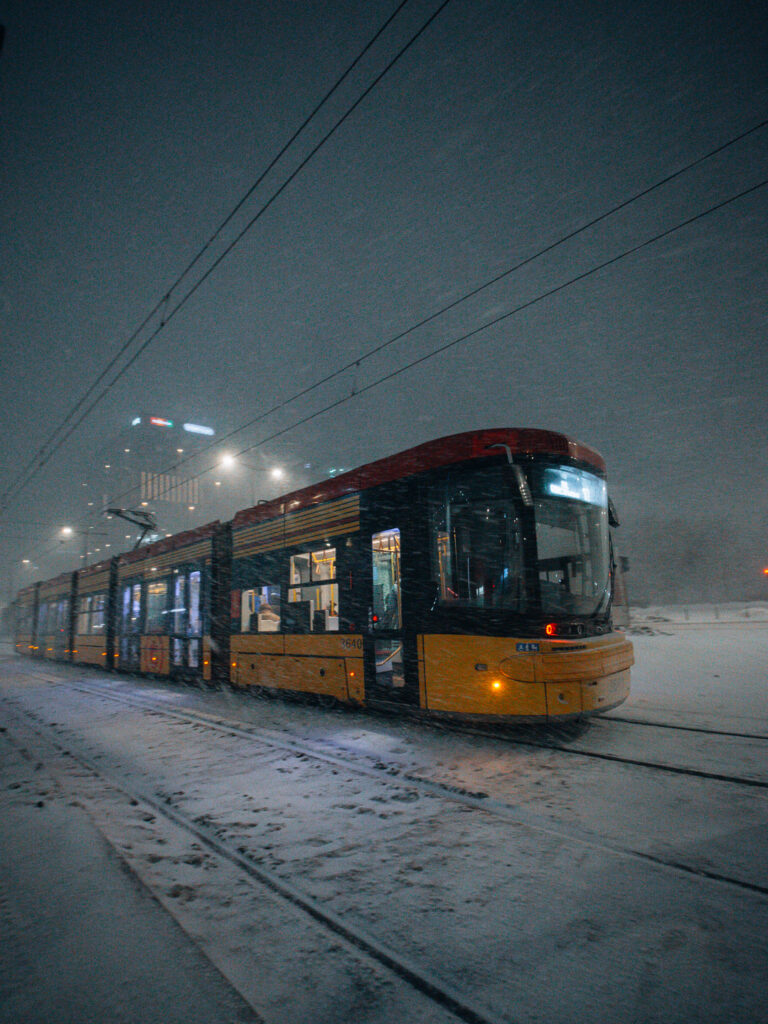
The 111.4-Degree Field of View
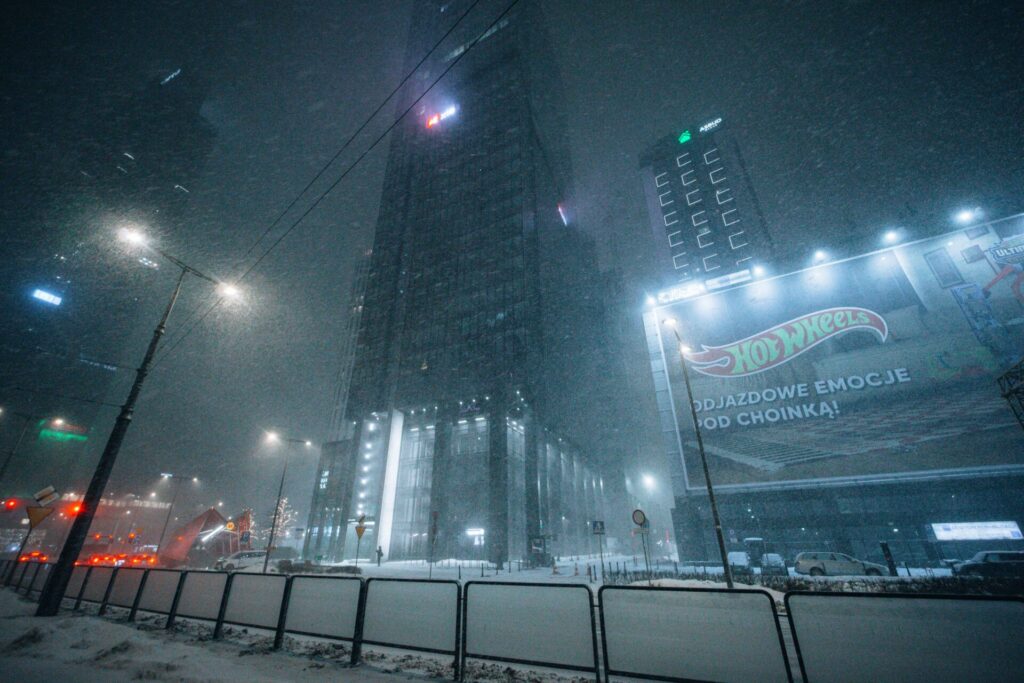
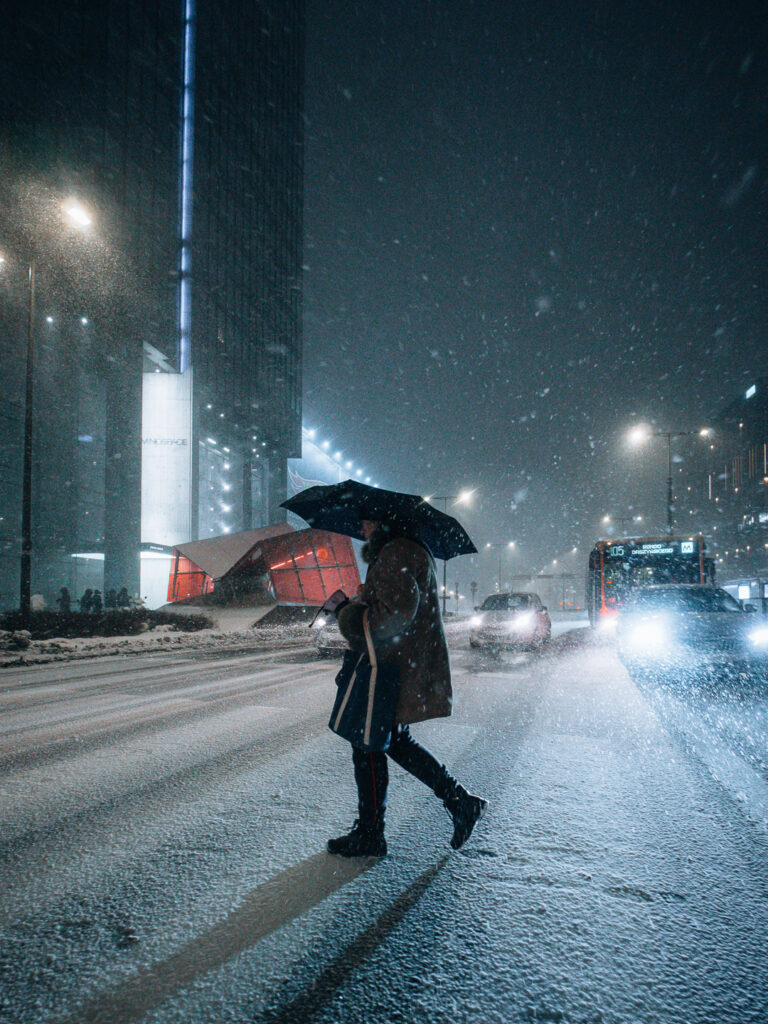
Here's what I didn't fully appreciate until I started shooting. 111.4 degrees is massive. Even knowing the AstrHori 9mm F2.8 was equivalent to 13.5mm on full-frame, the sheer amount of space captured in each frame surprised me.
In a blizzard, that extreme width became both an advantage and a challenge.
The advantage: I could capture the entirety of a street scene, foreground, subject, and background.
The challenge: filling that much space with intentional composition required discipline and ideas on-the-go.
Ultra-wide lenses punish lazy framing. With so much in the frame, every element matters. Empty space becomes noticeable. Background clutter dominates. You need strong foreground elements to anchor the composition and give viewers' eyes somewhere to land.
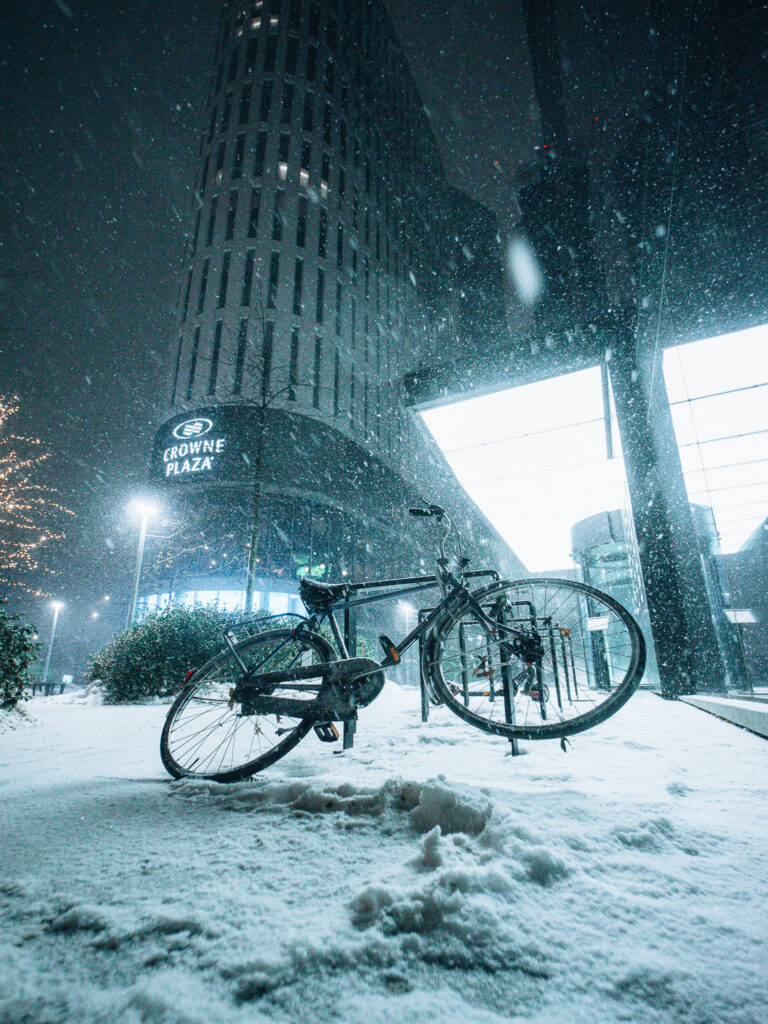
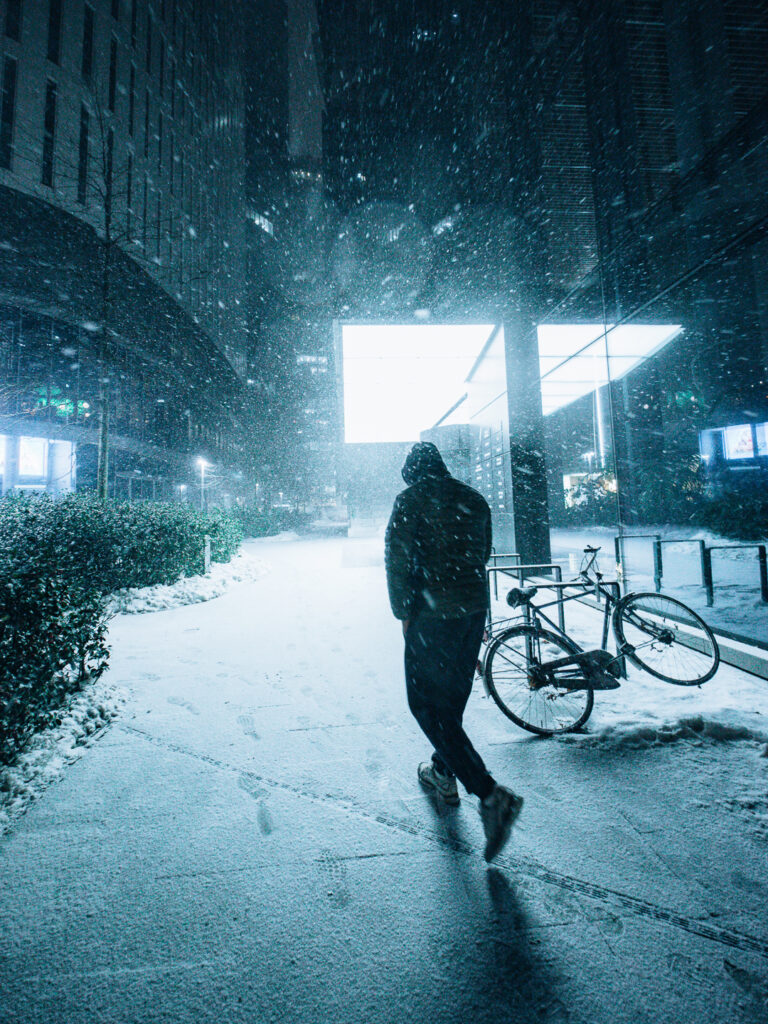
Shooting in the Storm
I spent a few hours working through different parts of Warsaw, looking for scenes where the blizzard added drama rather than just boring detail.
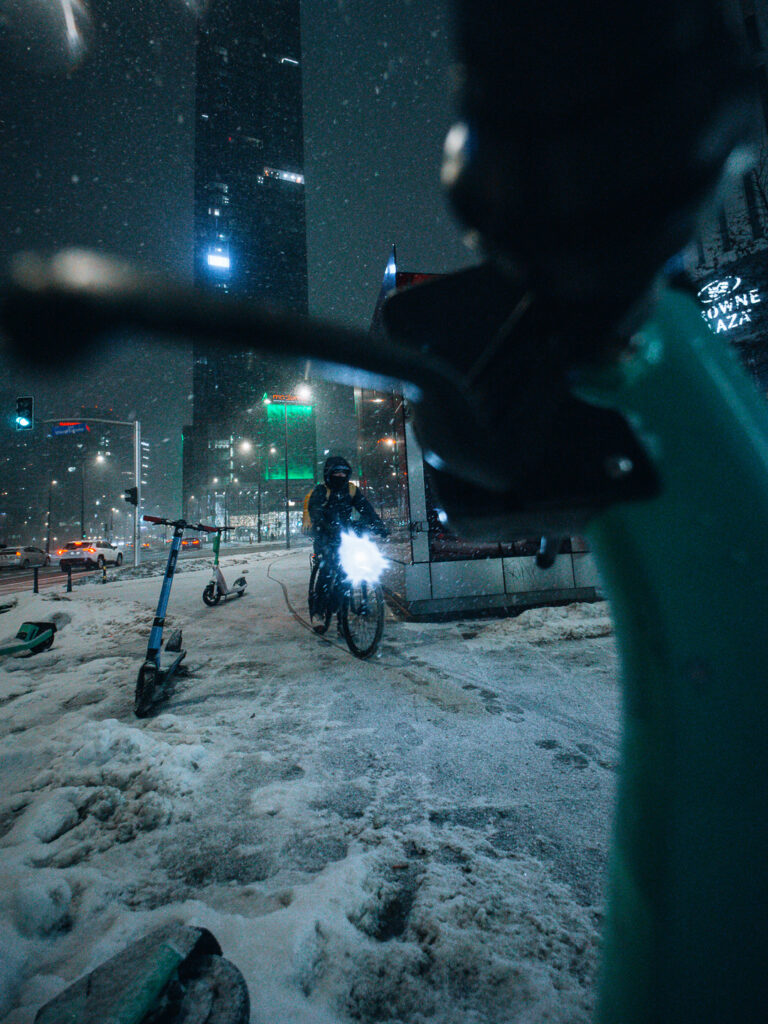
The shot that worked best was almost accidental. A bicycle leaning at an angle against a railing, nearly buried in accumulating snow. I dropped low to the ground, the AstrHori 9mm F2.8's close focusing distance of just 0.2 meters (about 8 inches) allowed me to get extremely close to the bike while keeping the snow-filled background visible. The low angle added drama, the ultra-wide perspective exaggerated the bike's lean, and the falling snow in the background created layers of depth that made the scene feel three-dimensional.
That's the magic of ultra-wide lenses in the right conditions: they don't just capture more space, they create perspective and depth that narrower lenses can't replicate.
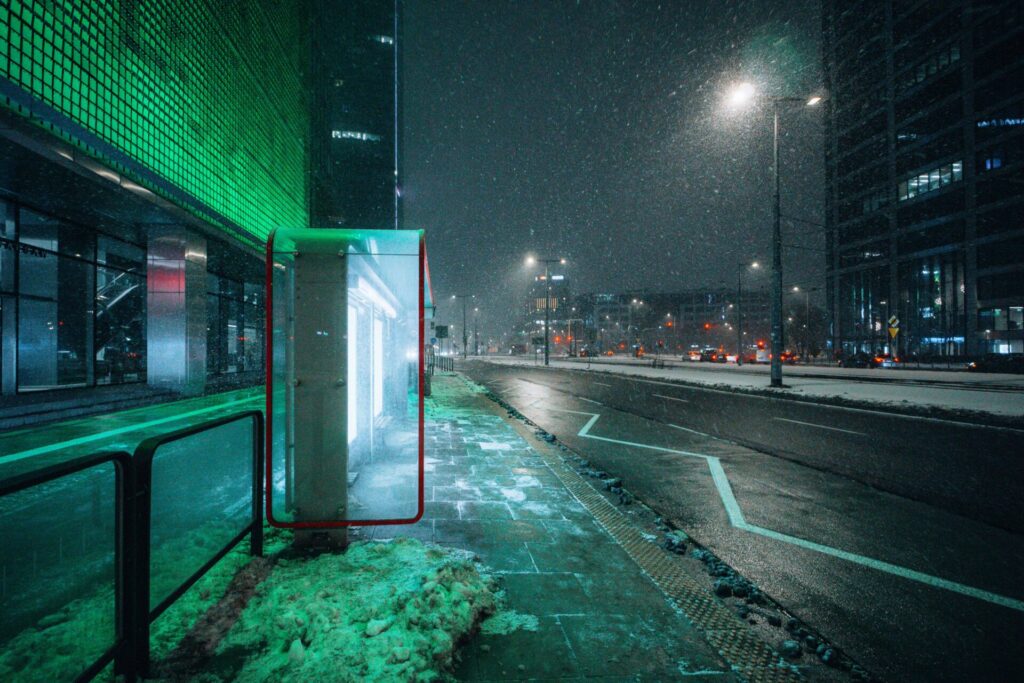
Image Quality: It's Sharp!
The AstrHori 9mm F2.8 delivers respectable optical performance for its price point.
Center sharpness at F2.8 is good. Not exceptional, but certainly very usable. Stop down to F4, and center sharpness improves noticeably.
Corner sharpness at F2.8 shows visible softness, which is common for budget ultra-wide lenses. Stopping down to F4 improves corners significantly, though they never quite match the center for sharpness. For street photography where key subjects typically live in the center or mid-frame, this is an acceptable compromise.
Distortion control impressed me. Despite the ultra-wide degree field of view, the AstrHori 9mm F2.8 maintains a rectilinear rendering with minimal barrel distortion. Straight lines through building edges, railings, street signs, stay relatively straight rather than bowing outward like fisheye lenses. For architectural street photography, this matters significantly.
Chromatic aberration is present but moderate. In high-contrast areas, snow-covered surfaces against dark buildings, for instance, I noticed some color fringing near frame edges. This is correctable in Lightroom with one click, making it a minor rather than critical issue.
Vignetting at F2.8 is noticeable, with darker corners characteristic of ultra-wide lenses shot wide open. In many cases, I left the vignetting uncorrected. It naturally draws attention toward the center of the frame, which works well for compositional purposes.
Where to Buy the AstrHori 9mm F2.8
- AstrHori official store: https://www.astrhori.cn/products/mf-9mm-f2-8-ultra-wide-angle-aps-c-lens-for-e-fx-eos-r-m43-z?ref=wngxyzgq
- Amazon: https://link.amazon/B00JfpC3d
Every photo in this review was edited with my Banger V1 Lightroom presets (https://eastbanger.com/banger-v1). If you like the look of these blizzard shots, you can get the same starting point there.
Disclosure: Some links on this page are affiliate links. If you buy through them, I may earn a small commission at no extra cost to you.
What Didn't Work
No lens is perfect, and the AstrHori 9mm F2.8 has clear limitations worth acknowledging.
Manual focus is slower than autofocus in situations requiring quick adjustments. For street photography where you're pre-focused at a set distance, this is manageable. For situations where focus distance changes rapidly, autofocus would be faster and more reliable.
The lack of weather sealing is a genuine concern in extreme conditions. The lens performed well in the blizzard, but I was careful to protect it from direct snow accumulation and moisture. A properly weather-sealed lens would've allowed more aggressive shooting without worry.
Flare control is acceptable but not exceptional.
The weight distribution on the Sony A6000 felt slightly front-heavy with the AstrHori 9mm F2.8 mounted. Not problematic for a few hours of shooting, but noticeable. A small grip accessory on the camera would improve balance. But this is more like a Sony A6000 issue, rather than the lens.
Who Should Buy the AstrHori 9mm F2.8?
After testing the AstrHori 9mm F2.8 in such extreme conditions, I can recommend it to specific types of photographers.
Budget-conscious shooters exploring ultra-wide photography will find exceptional value here. For $169, you're getting ultra-wide capability with respectable optical quality and solid build. No other lens in this price range delivers 9mm with F2.8 and this level of construction.
Street photographers who value compact, unnoticeable gear will appreciate the small size and manual focus operation. The AstrHori 9mm F2.8 doesn't look expensive or threatening, it reads as a casual lens that doesn't draw attention.
Travel photographers prioritizing portability get an ultra-wide lens that adds minimal weight and bulk to their kit. At 307 grams, it's light enough to carry all day without fatigue.
Who Should Skip It?
This lens isn't for everyone.
Those seeking professional-grade optical performance should invest in premium ultra-wide lenses. The AstrHori 9mm F2.8 delivers very good image quality for its price, but it doesn't match $500-1000 alternatives for sharpness, distortion control, or flare resistance.
Video shooters needing parfocal design or clickless aperture control won't find those features here. The lens is optimized for stills photography.
AstrHori 9mm vs 7Artisans 10mm vs Brightin Star 7.5mm
I’ve shot all three of these APS-C ultra-wides on my Sony A6000, and they’re closer in price than they are in purpose.
| AstrHori 9mm F2.8 | 7Artisans 10mm F2.8 AF | Brightin Star 7.5mm F2.8 IV | |
|---|---|---|---|
| Type | Rectilinear, manual focus | Rectilinear, autofocus | Fisheye, manual focus |
| Angle of view | 111.4° | 105.3° | 190° |
| Minimum focus | 0.2 m | 0.3 m | 0.15 m |
| Filters | 62mm front | 62mm front | 27mm rear slot |
| Weight | approx. 306.5 g | approx. 232 g | approx. 274 g |
| Price (list) | $169 | $199 | $159.99 |
Pick the AstrHori 9mm if you want the widest straight-line view of the three and don’t mind focusing by hand. With this much depth of field, zone focusing does most of the work.
Pick the 7Artisans 10mm F2.8 (link: https://eastbanger.com/7artisans-10mm-f2-8-review-one-week-street-photography) if autofocus matters. It’s lighter, records EXIF data, and the fast AF made a real difference during my week of close-range street shooting. You give up a little width in exchange.
Pick the Brightin Star 7.5mm F2.8 IV (link: https://eastbanger.com/brightin-star-7-5mm-best-fisheye-lens-sony-aps-c) if you want the image to bend. It’s a fisheye, so the curve is the point. It’s great for dramatic architecture and immersive close-ups, and wrong for anything that needs straight lines.

AstrHori 9mm F2.8 Final Words
The AstrHori 9mm F2.8 proved itself in conditions that would challenge lenses costing several times as much. In Warsaw's heaviest blizzard in years, with visibility near-zero and temperatures well below freezing, this $169 ultra-wide lens delivered sharp images, handled the cold without complaint, and captured scenes that narrower lenses simply wouldn't.
Its strengths are clear. Ultra-wide 111.4-degree field of view, respectable optical quality especially when stopped down, solid all-metal construction, F2.8 maximum aperture for low-light capability, and minimal distortion despite the extreme width.
The limitations are equally clear. No autofocus, and no weather sealing. Corner softness wide open, and moderate chromatic aberration. These are acceptable compromises at $169, but they're compromises nonetheless worth mentioning.
For photographers exploring ultra-wide photography on APS-C cameras without investing $500-1000 in premium glass, the AstrHori 9mm F2.8 delivers undeniable value. It's well-built, optically competent, and ultimately capable of producing dramatic images in the right hands and conditions.
In fact, that blizzard in Warsaw proved something important: the best lens isn't always the most expensive one. Rather, it’s the one that forces you into the storm, makes you work for the shot, and delivers images you couldn't capture any other way.
The AstrHori 9mm F2.8 is that lens.
As usual, here's the video from that night.
If you are into wide lenses, don't forget to check out the 7Artisans 10mm F2.8 AF, 7Artisans 6mm F2, and AstrHori 6mm F2.8 for FE lens reviews.
AstrHori 9mm F2.8 FAQ
Is the AstrHori 9mm F2.8 good for astrophotography?
On paper, it’s a solid fit. A 13.5mm-equivalent view at f/2.8 is a classic wide Milky Way setup, and manual focus is no drawback when you’re focusing on stars anyway. I haven’t shot night skies with it myself, so I can’t speak to star shapes in the corners. Given the corner softness I saw wide open, expect the cleanest results toward the center of the frame. Use magnified live view to nail infinity focus rather than trusting the distance scale.
Does the AstrHori 9mm work on full frame?
It mounts on full-frame bodies in the same system, but it’s designed for APS-C, so the image won’t cover the whole full-frame sensor. Switch your camera to APS-C/crop mode, and you’ll get the same 13.5mm-equivalent view I got on the A6000.
How bad is the distortion?
It’s very low. This is a rectilinear lens, not a fisheye, and in Warsaw, building edges, railings, and tram lines stayed straight across the frame. An independent comparison of 9mm APS-C primes reached the same conclusion. The bigger issue at f/2.8 is vignetting, which mostly disappears by f/5.6.
Can I use it for video?
Yes, with limits. Deep depth of field makes manual focus easy for wide establishing shots and walk-and-talk footage. It’s built for stills, though, so there’s no de-clicked aperture and no parfocal design.
Which cameras does it fit?
It comes in Sony E, Fujifilm X, Canon RF, Nikon Z, and Micro Four Thirds versions. On APS-C bodies, it’s 13.5mm equivalent. On Micro Four Thirds, the smaller sensor makes it 18mm equivalent, so you lose a good part of the ultra-wide effect.
AstrHori 9mm or 7Artisans 10mm: which should I buy?
If you want the widest rectilinear view for the money and like shooting manually, go with the AstrHori. If autofocus and EXIF data matter more than the extra width, the 7Artisans 10mm F2.8 AF is the easier daily lens.